Skip to content
  • Calendar
  • Instructors
  • About
  • Support
J-HeaderImage-test2
Jodo

The mind must always be in the state of flowing.

– Takuan Sōhō
Logo-APP-Mon

Jodo

The Way of the Stick

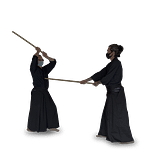
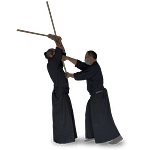
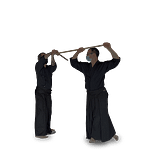
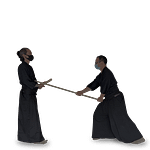
Jodo is a traditional Japanese martial art practiced with a wooden staff called a jō. Through structured partner training, students develop timing, distance, posture, coordination, and the ability to remain calm and attentive while responding to another person.

At Kogetsukai, beginners start with fundamental staff techniques and the Zen Nihon Kendo Renmei (ZNKR) Seitei Jodo curriculum. More experienced students may also pursue classical Shintō Musō-ryū study with instructor approval.

Our Training

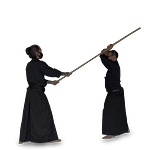
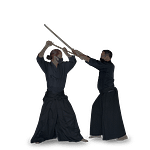
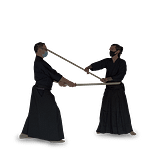
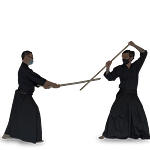
Jodo includes individual basic exercises and paired kata, predetermined forms practiced with a staff and wooden sword. Training is cooperative: each partner has a defined role and helps the other develop precision, awareness, and control.

Beginning with Seitei Jodo

New students receive instruction in fundamental techniques, called kihon, and the twelve paired kata of ZNKR Seitei Jodo. These provide a structured foundation for learning how to handle the staff, move effectively, and work with a partner.

Students learn progressively and do not need to know the forms before joining. As training develops, they study both the staff and wooden-sword roles.

Seitei Jodo is practiced internationally, offering opportunities for continued learning through seminars, examinations, and training with other practitioners.

Training is supervised by Peter Boylan Sensei of Michigan Koryū Kenkyukai. Kogetsukai is affiliated with the Midwest Kendō Federation (MWKF), a regional member federation of the All United States Kendō Federation (AUSKF).

Classical Study

Shintō Musō-ryū
Shintō Musō-ryū is the classical tradition from which Seitei Jodo was developed. Its study explores a broader curriculum of staff techniques and associated weapons arts, including swordsmanship.

Kogetsukai studies this tradition under the guidance of Peter Boylan Sensei of the Michigan Koryu Kenkyukai. Participation in classical training requires his approval; beginning Seitei Jodo does not require prior admission to the classical curriculum.

Who Can Train?

Jodo is open to teens and adults, including complete beginners. No previous martial arts or sword experience is required.

Training emphasizes controlled movement, cooperation, and steady development. Students with movement limitations should speak with the instructor before attending so appropriate practice options can be discussed.

Training Schedule

  • 1st, 3rd & 5th Sundays

    12:00 PM – 2:00 PM

  • 2nd & 4th Sundays

    12:30 PM – 2:30 PM

ZNKR Seitei Jodo and Shinto Muso Ryu.
Please refer to our Training Calendar for the most up-to-date information.

Training Schedule

  • 1st, 3rd & 5th Sundays

    12:00 PM – 2:00 PM

  • 2nd & 4th Sundays

    12:30 PM – 2:30 PM

ZNKR Seitei Jodo and Shinto Muso Ryu.
Please refer to our Training Calendar for the most up-to-date information.

Monthly Support

Monthly training support consists of two separate contributions: one to Daiyuzenji Zen Temple, which hosts our training, and one to Kogetsukai, which supports instruction, youth programs, seminars, and equipment.

Daiyuzenji Temple

Daiyuzenji Temple
$ 50 a month
  • Supports the temple that hosts Kogetsukai's regular training.

Kogetsukai

Kogetsukai
$ 25 a month
  • Supports instruction, youth programs, seminars, and equipment.

Total Monthly Support

$75 / month

Together, these two monthly contributions sustain authentic Japanese martial arts training in Chicago.

Questions Before Your First Class​

Do I need martial arts experience?

No. Beginners start with basic staff handling, posture, footwork, and etiquette. Instruction progresses into structured partner practice as students develop their skills.

Do I need my own staff or wooden sword?

No. Loaner equipment is available for first-time students. Please speak with an instructor before purchasing equipment so we can help you choose what is appropriate.

What should I wear to my first class?

Comfortable athletic clothing that allows you to step and move freely is appropriate for an introductory class. A uniform can be discussed when you decide to continue training.

Will I practice individually or with a partner?

Both. Basic techniques are practiced individually and with partners. Paired kata develop timing, distance, coordination, and an understanding of both the staff and sword roles.

Will I spar as a beginner?

No. Beginners learn through basic exercises and predetermined kata. Partner training emphasizes defined roles, controlled movement, and cooperation.

Is Jodo physically demanding?

Jodo is generally low-impact, but it involves repeated stepping, turning, staff movements, and coordinated partner work. Balance, mobility, and attention are important parts of practice.

Can older adults or people with movement limitations participate?

Adults begin Jodo at different ages and ability levels. Tell the instructor about any movement limitations before class so you can discuss whether the training is suitable and what adjustments may be appropriate.

Can beginners join Shintō Musō-ryū training directly?

Our beginner pathway starts with fundamental techniques and Seitei Jodo. Classical Shintō Musō-ryū training requires separate approval from Peter Boylan Sensei.

Why does the Sunday start time change?

Selected Sundays include Katori Shintō-ryū training earlier in the day, which changes the Jodo start time. Check the training calendar before attending, especially for your first visit.

Begin with a Complimentary Introductory Class

The best way to understand Jodo is to experience it firsthand. New students are welcome to observe or participate in a complimentary introductory class covering basic etiquette, movement, and training equipment. No prior martial arts experience is required.

Logo-APP-Mon
Jodo
Jodo Kogetsukai
Kogetsukai Jodo
Jodo
Jodo
Kogetsukai Jodo
Kogetsukai Jodo
Kogetsukai Jodo
Kogetsukai Jodo
Kogetsukai Jodo
Kogetsukai Jodo
Kogetsukai Jodo
Jodo
Kogetsukai Jodo
Jodo
Jodo Kogetsukai
Kogetsukai Jodo
Jodo
Jodo
Kogetsukai Jodo
Kogetsukai Jodo
Kogetsukai Jodo
Kogetsukai Jodo
Kogetsukai Jodo
Kogetsukai Jodo
Kogetsukai Jodo
Jodo
Kogetsukai Jodo
Jodo
Jodo
Jodo
Jodo

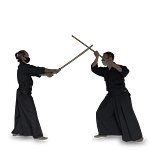
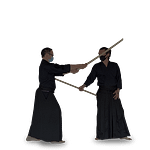
1. Tsuki Zue

( Reaching Stick )
Jodo

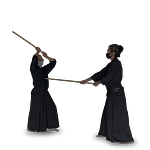
2. Suigetsu

( Solar Plexus )

Jodo

3. Hissage

( Hidden Stick )

Jodo

4. Shamen

( Side Head )

Jodo

5. Sakan

( Seeing into the left )

Jodo

6. Monomi

( Looking Out)

Jodo

7. Kasumi

( Mist )

Jodo

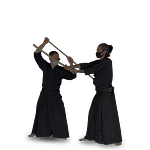
8. Tachi Otoshi

( Dropping on the Sword )
Jodo

9. Rai Uchi

( Thunder Strike )

Jodo

10. Seigan

( Straight to the Eyes )

Jodo

11. Midare Dome

( Stopping Confusion )
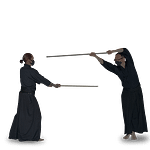
Jodo

12. Ran Ai

( Uniting with chaos )

Jodo
Jodo

1. Tsuki Zue

( Reaching Stick )

Jodo

2. Suigetsu

( Solar Plexus )

Jodo

3. Hissage

( Hidden Stick )

Jodo

4. Shamen

( Side Head )

Jodo

5. Sakan

( Seeing into the left )

Jodo

6. Monomi

( Looking Out)

Jodo

7. Kasumi

( Mist )

Jodo

8. Tachi Otoshi

( Dropping on the Sword )

Jodo

9. Rai Uchi

( Thunder Strike )

Jodo

10. Seigan

( Straight to the Eyes )

Jodo

11. Midare Dome

( Stopping Confusion )

Jodo

12. Ran Ai

( Uniting with chaos )

Logo-APP-Mon

Visit Our Dojo

Jodo

Daiyuzenji

3717 N. Ravenswood Ave. #112 Chicago IL 60613


Training
Sundays

Parking
Free street parking

Public Transit
CTA Addison Brown Line station

New Students
Complimentary introductory class
by appointment.

Logo-APP-Mon

Visit Our Dojo

Jodo

Daiyuzenji

3717 N. Ravenswood Ave. #112
Chicago IL 60613

Training

Parking
Free street parking

Public Transit
CTA Addison Brown Line station

New Students
Complimentary introductory class by appointment.

Jodo